Losing Weight Doesn’t Have to Mean Losing Muscle: Results of a 21-Day Study of a Programme with the Slim Beam Amino Acid Complex
Minus 5.4 kg of body weight, minus 4.5 kg of body fat, and plus 1 kg of muscle mass in 21 days. These were the average results obtained by researchers studying a low-carbohydrate, low-fat nutrition programme supplemented with an amino acid complex.
But the most interesting part of this study is not simply the number on the scale. The researchers assessed what actually happens to the body during weight loss: how body fat, body measurements, visceral fat, and muscle mass change.
Let us look at the results of the study conducted with the participation of specialists from Danylo Halytsky Lviv National Medical University and examine the role of protein and amino acids in body weight management programmes.
Why the Number on the Scale Is Not the Main Measure of Successful Weight Loss
Most people judge weight-loss results by one indicator — body weight. If the number on the scale goes down, the programme appears to be working.
However, body weight consists of several components: body fat, muscle, bone, water, and other tissues.
When calorie intake is restricted, all of these components may change.
The ratio between fat mass and muscle mass is particularly important. Muscles contribute to physical activity, strength, functional capacity, and energy metabolism.
For this reason, modern approaches to weight management focus not only on reducing total body weight but also on assessing body composition.
The key goal of effective weight loss is to reduce excess body fat while preserving as much muscle mass as possible.
This principle is one of the reasons why nutrition programmes with controlled calorie intake and an adequate supply of protein and amino acids are of particular interest.
Amino Acids and Protein: Why They Matter During Weight Loss
Proteins are essential building materials for many structures in the human body. They are required for tissue formation and renewal, as well as for the synthesis of enzymes, hormones, and other biologically active compounds.
During digestion, dietary proteins are broken down into amino acids, which the body then uses according to its needs.
Essential amino acids are particularly important because the body must obtain them from food.
They include:
- leucine;
- isoleucine;
- valine;
- lysine;
- methionine;
- threonine;
- tryptophan;
- phenylalanine;
- histidine.
Leucine, isoleucine, and valine form a group known as branched-chain amino acids, or BCAAs.
These amino acids participate in protein metabolism, while leucine plays a particularly important role in regulating muscle protein synthesis.
What Happens to Muscle During a Diet?
When the body receives less energy than it expends, it begins to make greater use of its own energy reserves.
However, a calorie deficit also creates conditions in which adequate protein intake becomes particularly important.
Scientific research indicates that adequate protein intake combined with physical activity can help maintain muscle mass during weight loss.
This is why the protein and amino acid composition of the diet is an important part of a well-designed weight management programme.
Low-Carbohydrate Diets: How the Body Shifts Towards Using Fat Stores
Low-carbohydrate nutrition strategies are one of the approaches used in modern dietetics.
Their principle is to reduce the amount of carbohydrates in the diet, which leads to corresponding changes in the energy sources used by the body.
When carbohydrate intake is substantially restricted, glycogen stores decrease, hormonal regulation of energy metabolism changes, and the utilisation of fatty acids increases.
Under certain conditions, the liver begins to produce more ketone bodies, which can serve as an alternative energy source for many tissues.
This metabolic state is known as nutritional ketosis.
An important feature of the programme studied was the combination of three factors:
Carbohydrate restriction + fat restriction + controlled protein and amino acid intake.
This approach created an energy deficit while simultaneously providing the body with amino acids.
The researchers aimed to determine how effective this approach would be compared with a conventional hypocaloric Mediterranean diet.
The Scientific Study: 37 Women, Two Nutrition Programmes, and 21 Days of Observation
In 2022–2023, specialists from Danylo Halytsky Lviv National Medical University conducted a study evaluating the effectiveness of a short-term body weight management programme.
The study included 37 women aged 19 to 42 who were overweight or had class I–II obesity.
The participants had an average age of 32.8 years.
The women were divided into two groups.
Study Group — 19 Participants
Participants followed a low-carbohydrate, low-fat diet supplemented with an amino acid complex.
Protein intake was calculated individually at approximately 1.2 g per kilogram of body weight.
Half of the prescribed protein intake came from food, while the other half was provided by a special complex containing milk protein and amino acids.
The diet also included at least 600 g of vegetables per day.
Control Group — 18 Participants
Participants followed a hypocaloric Mediterranean diet.
Daily calorie intake was individually reduced by approximately 10–20% compared with calculated energy requirements.
Both groups were advised to engage in moderate physical activity every day.
How Were the Results Assessed?
At the beginning and at the end of the 21-day programme, the researchers performed:
- body weight and height measurements;
- body mass index calculations;
- chest, waist, and hip measurements;
- bioelectrical impedance analysis of body composition;
- assessment of fat and muscle mass;
- assessment of visceral fat level.
A Tanita BC-587 body composition analyser was used for bioelectrical impedance analysis.
In the study group, the presence of ketone bodies in urine was also monitored using test strips.
This allowed the researchers to assess not only overall weight change but also changes in individual components of body composition.
Results After 21 Days: What Did the Study Show?
Positive changes were recorded in both groups after completion of the programme.
However, the changes were more pronounced among participants following the low-carbohydrate, low-fat diet supplemented with the amino acid complex.
1. Reduction in Body Weight
Over 21 days, the average body weight of participants in the study group decreased from 81.1 kg to 75.8 kg.
Average weight loss was 5.4 kg, or 6.7% of initial body weight.
In the control group, average weight loss was 3.3 kg, or 3.8%.
Therefore, in kilograms, the average reduction in body weight in the study group was approximately 1.6 times greater.
According to the authors, the difference between the groups was statistically significant.
2. Reduction in Body Measurements
The changes were visible not only on the scale.
The following average results were recorded in the study group:
| Parameter | Study Group | Control Group |
|---|---|---|
| Reduction in chest circumference | 4.2 cm | 1.9 cm |
| Reduction in waist circumference | 4.2 cm | 2.0 cm |
| Reduction in hip circumference | 5.4 cm | 2.7 cm |
The change in waist circumference is particularly noteworthy.
This measurement is widely used in the assessment of abdominal obesity and risks associated with excess fat accumulation around the abdomen.
Over three weeks, participants in the study group lost an average of 4.2 cm from their waist circumference.
3. Reduction in Body Fat
This is one of the most important findings of the study.
According to bioelectrical impedance analysis, average fat mass in the study group decreased by 4.5 kg, representing 13.6% of initial fat mass.
In the control group, the reduction was 2.5 kg, or 7%.
Thus, the recorded reduction in body fat in the study group was approximately 1.8 times greater.
This is particularly important because excess accumulation of body fat — rather than simply a high body weight — is one of the key factors associated with metabolic health risks.
4. Reduction in Visceral Fat Level
Visceral fat is fatty tissue that accumulates around the internal organs within the abdominal cavity.
Unlike subcutaneous fat, excess visceral fat is more closely associated with impaired insulin sensitivity, metabolic changes, and cardiovascular risks.
In the study, visceral fat level was assessed using the scale of the bioelectrical impedance analyser.
Over 21 days, it decreased:
- by an average of 2.0 units in the study group;
- by 0.9 units in the control group.
Thus, the programme supplemented with amino acids was associated with a more pronounced reduction in this indicator.
5. The Most Interesting Result — Changes in Muscle Mass
Reducing body fat is a desirable outcome of a weight-loss programme. But what happens to muscle is equally important.
This is where the researchers obtained particularly interesting results.
In the study group, average muscle mass as estimated by bioelectrical impedance analysis increased by 1.0 kg, or 2.3%.
At the same time, muscle mass in the control group decreased by an average of 1.2 kg, or 2.6%.
These results draw attention to the role of amino acid intake during an energy deficit.
Muscle tissue is metabolically active. Maintaining it is important for physical performance, mobility, and long-term body weight management.
At the same time, bioelectrical impedance measurements are influenced by factors including the body's hydration status. Therefore, the recorded increase in estimated muscle mass is a promising result that deserves further investigation.
Study Summary: Five Indicators Over 21 Days
The following average results were recorded in the study group of 19 women:
| Parameter | Result |
|---|---|
| Body weight | −5.4 kg |
| Fat mass | −4.5 kg |
| Waist circumference | −4.2 cm |
| Hip circumference | −5.4 cm |
| Estimated muscle mass | +1.0 kg |
These figures represent average changes observed in a specific group of participants under the conditions of the study. Individual results depend on initial health status, dietary patterns, physical activity, and other factors.
Slim Beam: An Amino Acid Approach to Weight Management Programmes
Scientific interest in the use of amino acids during weight loss is primarily related to the need to support protein metabolism when energy intake is restricted.
This principle underlies the use of amino acid complexes in specialised nutrition programmes.
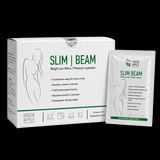
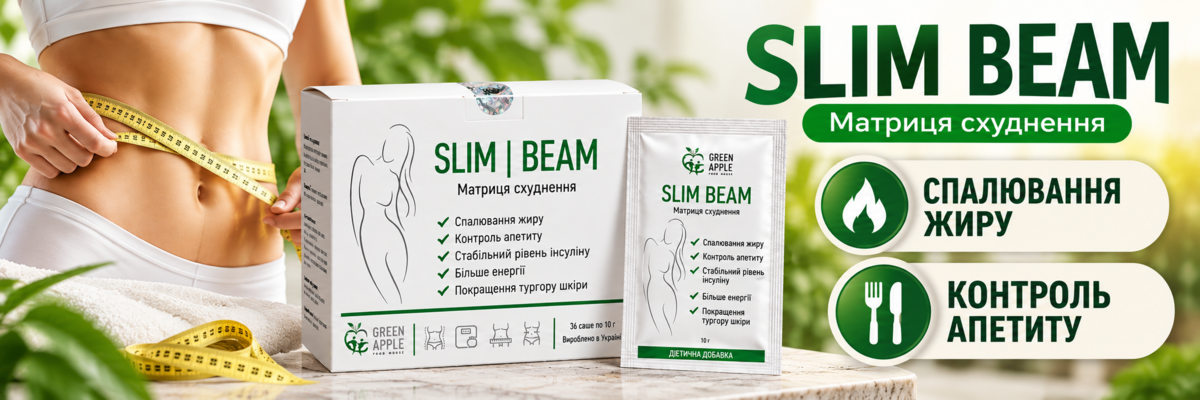
Slim Beam by Green Apple is the product around which the approach to additional amino acid support in the body weight management programme was developed.
The complex used in the study contained milk protein, amino acids, L-carnitine, potassium, magnesium, and other components.
What Roles Do the Components of the Amino Acid Complex Play?
Milk protein is a source of dietary protein and amino acids required for the synthesis and renewal of body tissues.
Leucine, isoleucine, and valine (BCAAs) participate in protein and energy metabolism. Researchers pay particular attention to the role of leucine in regulating muscle protein synthesis.
Lysine, methionine, threonine, tryptophan, and other amino acids provide the body with building blocks for the synthesis of its own proteins.
L-carnitine participates in the transport of long-chain fatty acids into mitochondria, where they can be used for energy production.
Magnesium is required for numerous enzymatic reactions, energy metabolism, and normal muscle function.
Potassium contributes to fluid and electrolyte balance, nerve conduction, and muscle contraction.
The combination of these components is of particular interest in nutrition programmes where calorie intake must be controlled while maintaining an adequate protein supply.
Why Weight Loss Is About More Than Calories
An energy deficit remains the fundamental requirement for reducing body weight.
However, two diets containing the same number of calories can differ considerably in their amounts of protein, amino acids, fats, carbohydrates, fibre, vitamins, and minerals.
As a result, they may affect satiety, eating behaviour, and body composition differently.
Adequate protein intake offers several important advantages in weight management programmes.
Maintaining Muscle Tissue
Protein provides the amino acids required to renew and maintain muscle tissue.
Satiety
Protein-rich foods may promote a longer-lasting feeling of fullness, making it easier to follow a planned eating pattern.
Energy Expenditure During Digestion
Protein digestion and metabolism require more energy than fat digestion, a phenomenon associated with the thermic effect of food.
Body Composition
Combining controlled calorie intake, adequate protein, and physical activity can help direct a weight-loss programme towards reducing body fat while preserving functionally important body tissues.
This is why the question “How many calories?” should be accompanied by another: “What is the body actually getting from those calories?”
Can Noticeable Results Be Achieved in Three Weeks?
Three weeks is a relatively short period, yet measurable changes in body weight and composition can already occur during this time.
The study showed that a 21-day programme combining controlled nutrition with an additional amino acid complex was associated with significant reductions in body weight, body measurements, and fat mass.
At the same time, 21 days should be regarded as the initial stage of weight management rather than the end of the process of achieving a long-term result.
Maintaining the achieved body weight requires an individually appropriate diet, physical activity, and sustainable everyday habits.
The researchers also highlighted the potential value of further studies examining the programme's effects on lipid metabolism, carbohydrate metabolism, and long-term maintenance of weight-loss results.
Who May Be Interested in an Amino Acid Approach to Weight Management?
An approach combining controlled calorie intake with additional amino acid support may be of interest to people who want to reduce excess body weight while paying particular attention to maintaining muscle.
Adequate protein intake is especially relevant for people who combine weight management with physical activity or find it difficult to obtain sufficient protein from their regular diet.
However, an intensive low-carbohydrate, low-fat programme should take an individual's health status into account.
The study did not include women who were pregnant or breastfeeding, or people with type 1 diabetes, gout, kidney disease, severe uncontrolled concomitant conditions, or individual sensitivity to components of the complex.
Therefore, reproducing the dietary programme used in the study should be considered only after an individual health assessment and with professional guidance.
Conclusions: Effective Weight Loss Is About Changing Body Composition
The results of the 21-day study demonstrated the potential of a low-carbohydrate, low-fat nutrition programme supplemented with an amino acid complex.
Compared with the control group following a hypocaloric Mediterranean diet, participants in the study group experienced greater reductions in body weight, body measurements, fat mass, and visceral fat level.
The change in estimated muscle mass was particularly noteworthy: it increased in the study group while decreasing in the control group.
The study was small and short-term, so its findings primarily characterise the effectiveness of the complete nutrition programme used in the study, rather than any single component. At the same time, the results provide a basis for further investigation of amino acid support during body weight management.
Slim Beam by Green Apple represents an amino acid-based approach to weight management in which not only kilograms but also the balance between fat and muscle mass matters.
Successful weight loss is not simply a smaller number on the scale. It is a carefully considered approach to body composition, nutrition, and long-term maintenance of results.
Scientific Basis of the Article
Primary Study
Fediaieva S. I., Yatsiuk V. M., Farmaha M. L., Leshchuk Y. L., Lomeiko S. M., Melenko S. “Evaluation of the Effectiveness of a Low-Carbohydrate and Low-Fat Diet with Additional Amino Acid Intake for Body Weight Reduction.”
The study was conducted with the participation of specialists from Danylo Halytsky Lviv National Medical University in 2022–2023. Material provided by the manufacturer.
Additional Sources
- World Health Organization — Obesity and overweight — information on overweight, obesity, and their impact on health.
- Gwin J. A. et al. Muscle Protein Synthesis and Whole-Body Protein Turnover Responses to Ingesting Essential Amino Acids, Intact Protein, and Protein-Containing Mixed Meals with Considerations for Energy Deficit. Nutrients. 2020;12(8):2457.
- Phillips S. M. Maintaining It after Losing It: Advantage Protein! Journal of Nutrition. 2020;150(3):425–426.
- Cunha G. M. et al. Efficacy of a 2-Month Very Low-Calorie Ketogenic Diet Compared to a Standard Low-Calorie Diet in Reducing Visceral and Liver Fat Accumulation in Patients With Obesity. Frontiers in Endocrinology. 2020;11:607.
- Colica C. et al. Efficacy and Safety of Very-Low-Calorie Ketogenic Diet: A Double Blind Randomized Crossover Study. European Review for Medical and Pharmacological Sciences. 2017;21:2274–2289.